

Complete Bench Dips Exercise Guide
Learn everything about Bench Dips exercise including proper form, muscles worked, benefits, variations, alternatives, and common mistakes to avoid.
Muscles Worked & Equipment
Primary Muscle
The main muscle group targeted by this exercise, receiving maximum activation during the movement.
Secondary Muscles
The main muscle group targeted by this exercise, receiving maximum activation during the movement.
The main muscle group targeted by this exercise, receiving maximum activation during the movement.
Equipment Needed
This exercise requires a sturdy bench or platform equipment to be performed safely and effectively.
Muscle Categories
This exercise primarily targets muscles that belong to the triceps category, contributing significantly to overall development.
This exercise primarily targets muscles that belong to the shoulders category, contributing significantly to overall development.
This exercise primarily targets muscles that belong to the chest category, contributing significantly to overall development.
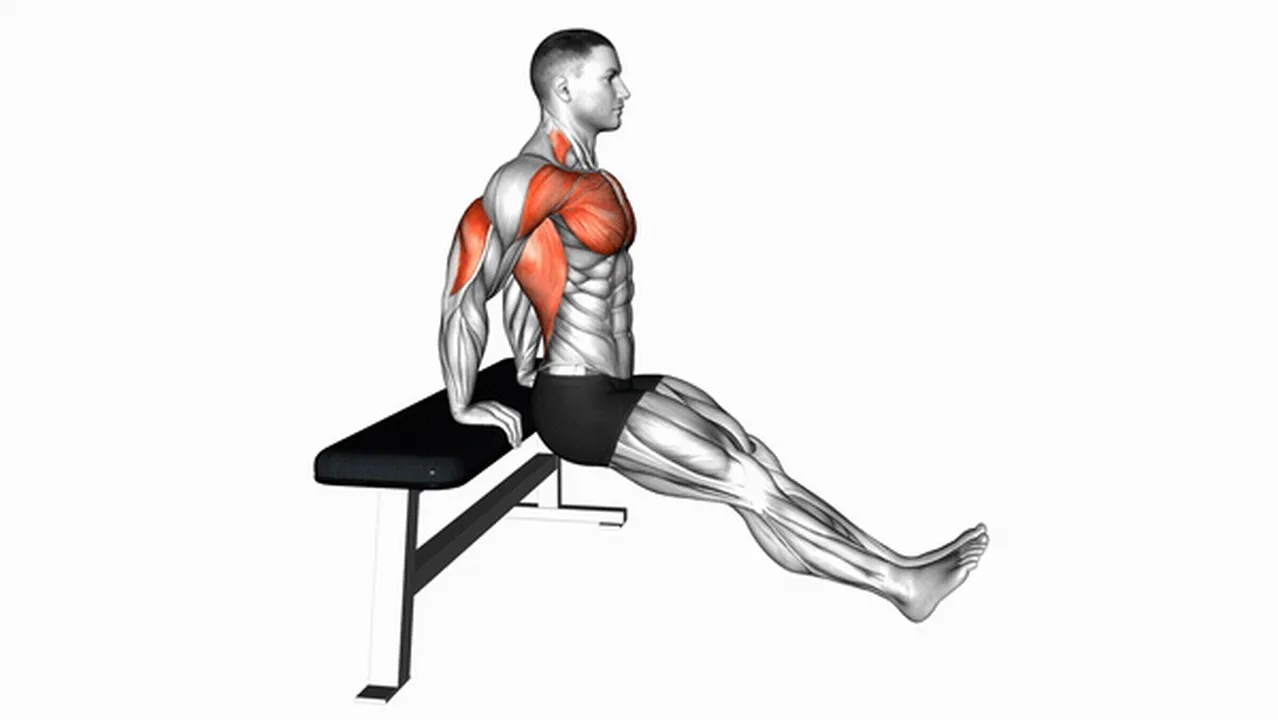
Introduction
1.
They mainly work your triceps (the back of your upper arms), shoulders, and chest.
2.
You only need a bench to do them – no special equipment is needed!
3.
This makes them easy to fit into any workout, at home or at the gym.
4.
Doing bench dips regularly will make your arms stronger and more toned.
5.
They're good for people just starting to exercise and those who want to add new exercises to their routine.
6.
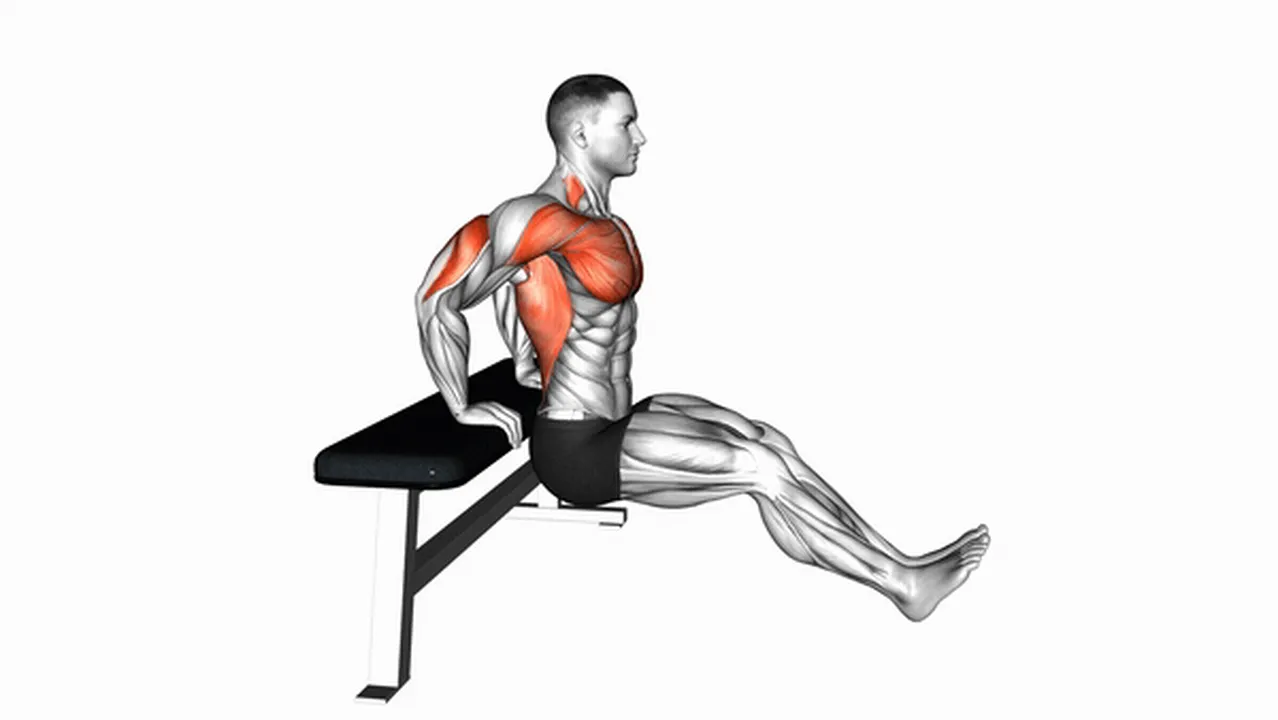
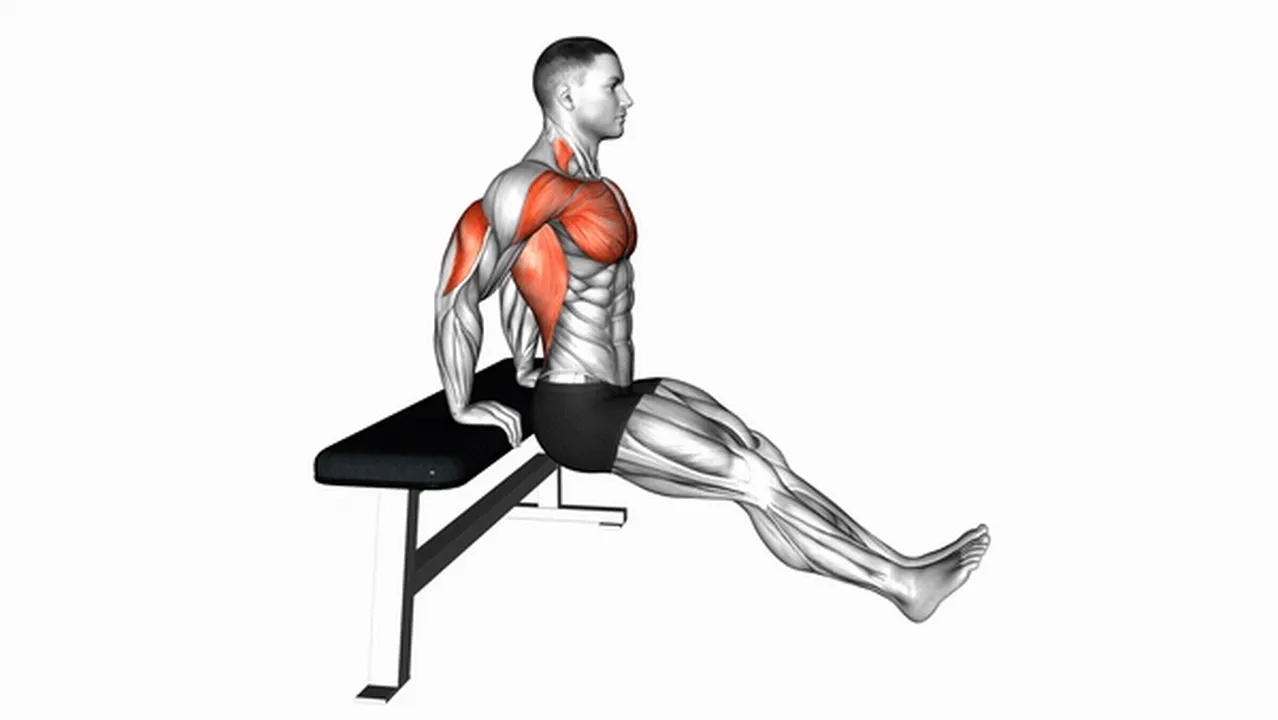
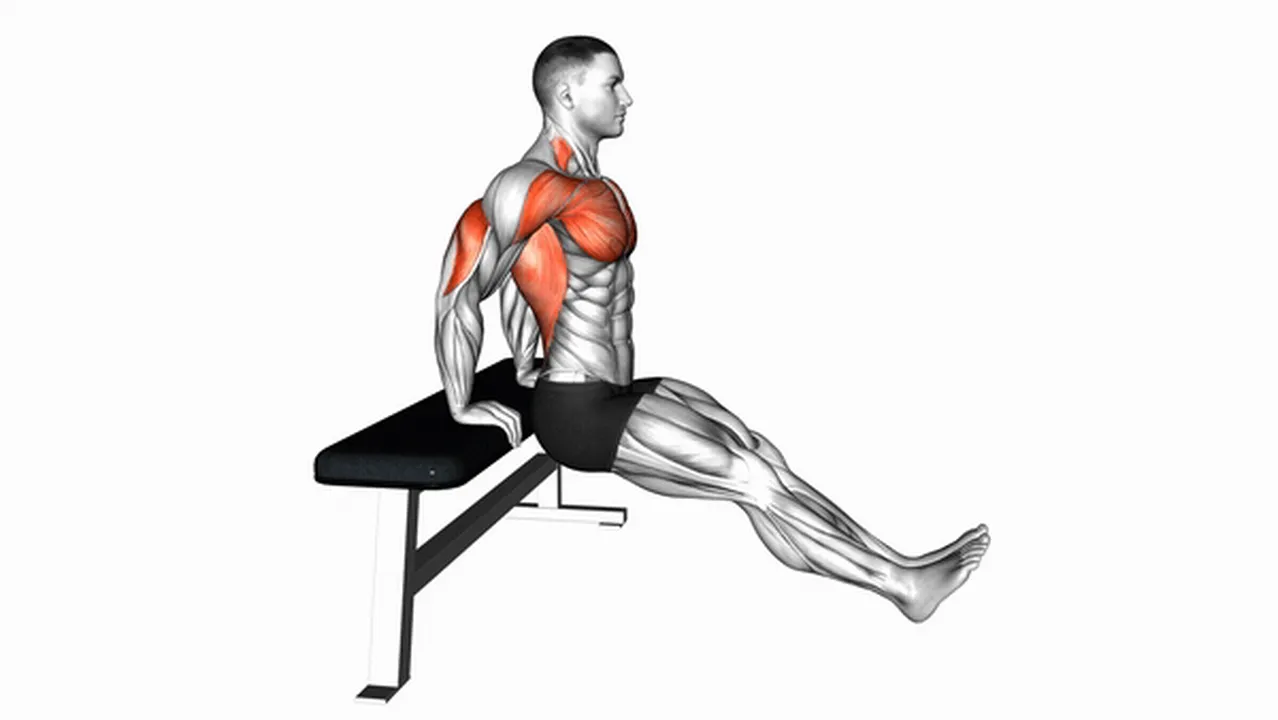
To do a bench dip, sit facing away from a bench with your hands on the edge, fingers pointing forward.
7.
Slide your bottom off the bench, keeping your arms straight but not locked.
8.
Lower your body by bending your elbows until they are at a 90-degree angle or slightly more.
9.
Push back up to the starting position using your arms.
10.
Remember to keep your back straight and your core engaged throughout the exercise for proper form and safety.
 Zylo AI
Free Calorie
Counter
App







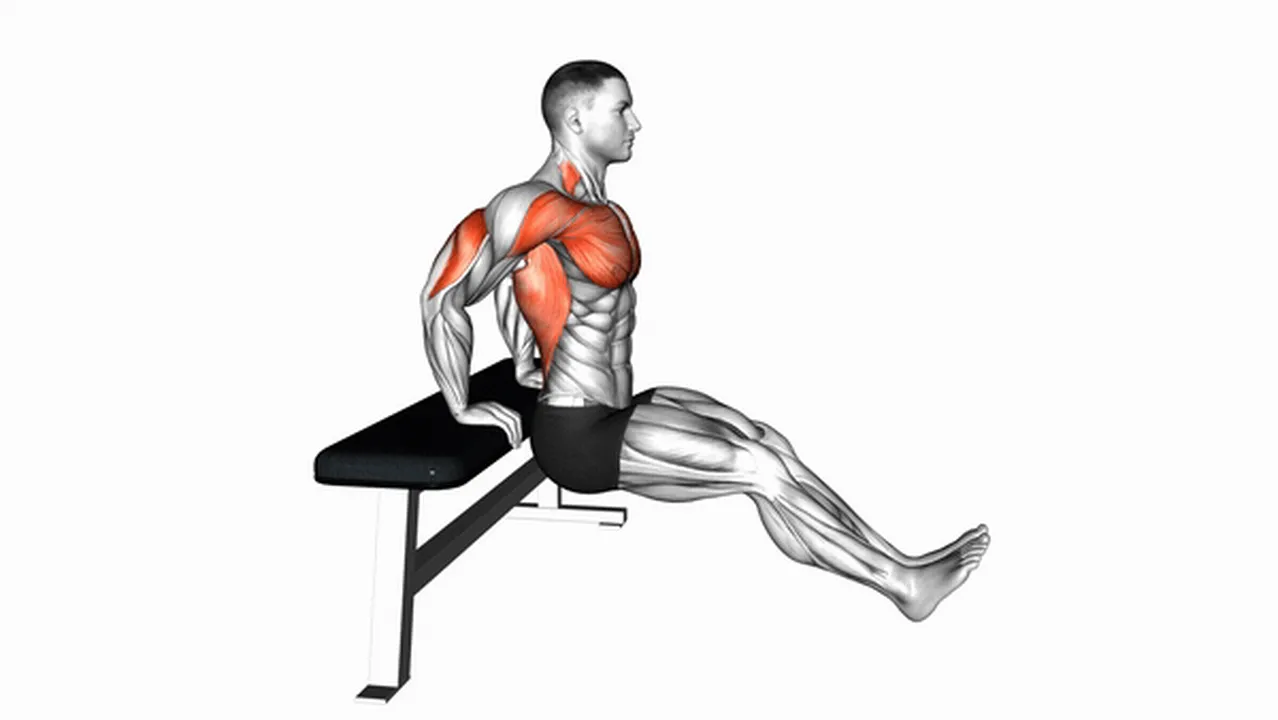
What are the benefits of bench dips?
1.
They mainly work your triceps, the muscles on the back of your upper arms. Strong triceps are important for pushing things and having strong arms overall.
2.
But it's not just your triceps! Bench dips also use your chest and shoulder muscles, giving you a good workout for your whole upper body.
3.
To do bench dips properly, you need to keep your body stable. This means your core muscles (your stomach and back) have to work hard to keep you balanced.
4.
Doing bench dips regularly can help you move your arms and shoulders more easily. It improves your flexibility and how far you can stretch your arms.
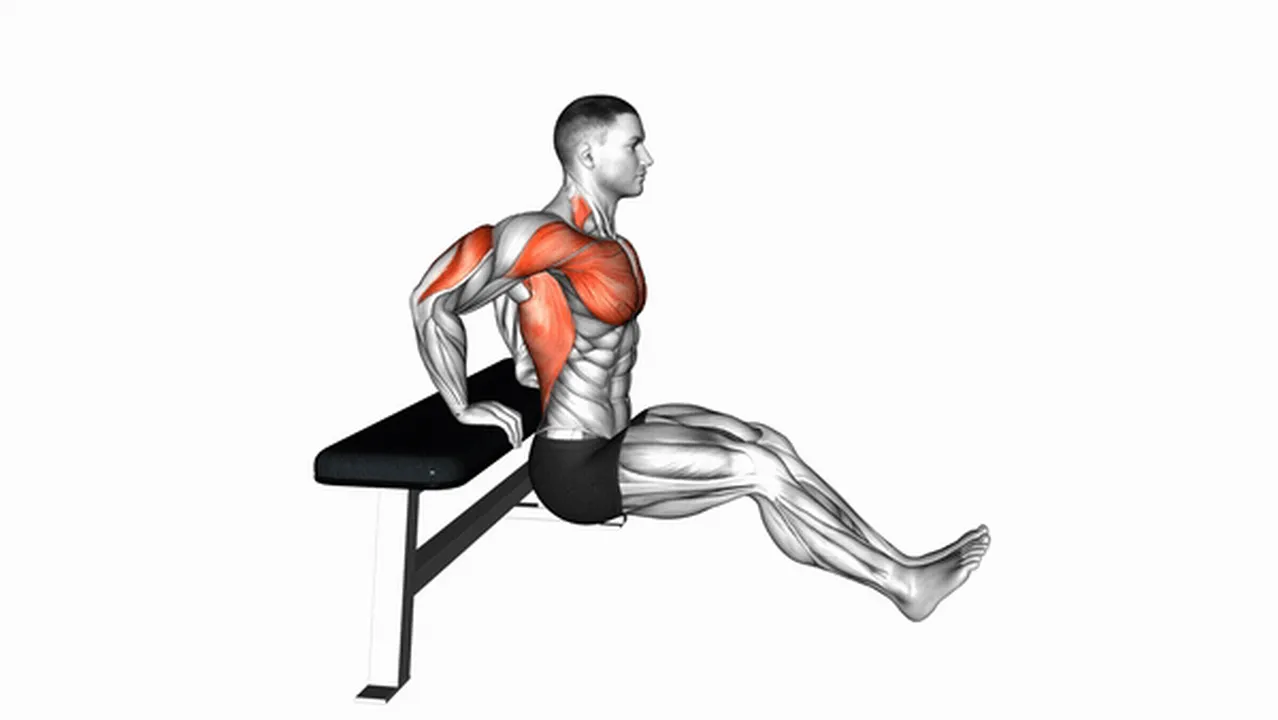
How to do bench dips?
1.
Position your legs: Stretch your legs out in front of you. Keep your knees bent at a right angle (like a 90-degree angle), and your feet flat on the floor. This helps you stay balanced.
2.
Slowly lower yourself: Bend your elbows to go down towards the floor. Keep your back close to the bench to avoid hurting your back. Go down until your elbows are bent at a right angle.
3.
Push back up: Use your hands to push yourself back up to where you started. Do this slowly and carefully.
4.
Repeat the movement: Do as many repetitions as you planned, keeping your movements slow and steady. Don't rush!
5.
Keep your elbows in: Try to keep your elbows pointing straight behind you. Don't let them stick out to the sides. This protects your shoulders and helps you do the exercise correctly.
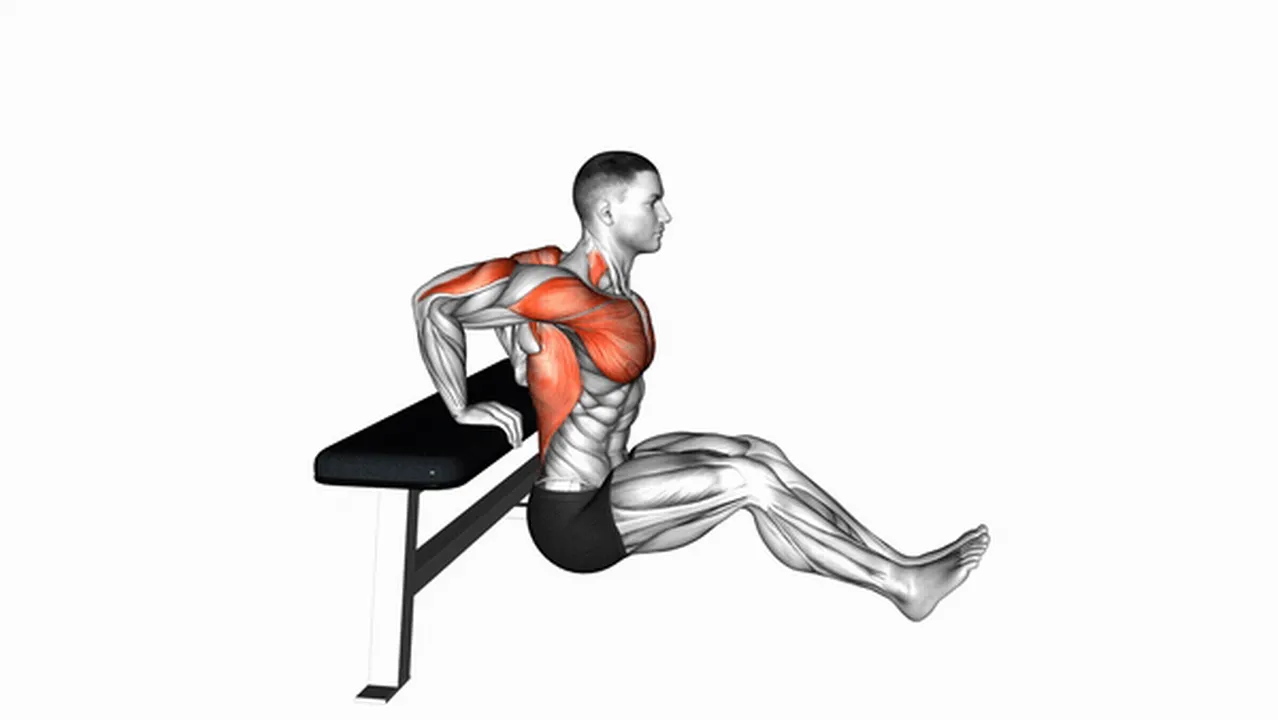
Common bench dip variations
1.
There are different ways to do bench dips, making them good for all fitness levels.
2.
Knees bent bench dips are easier. Keeping your knees bent makes the dip less intense, which is perfect for beginners or if you're just starting out. It helps you focus on doing the exercise correctly.
3.
Straight leg bench dips are harder. Stretching your legs out makes the exercise more challenging. This works your triceps more and also uses your core muscles more.
4.
Adding weight to bench dips makes them even harder. Holding a weight plate on your lap while doing dips increases the difficulty. This is best for people who are already strong and want to build more muscle.
5.
Elevating your feet during bench dips changes the exercise. Putting your feet on a higher surface makes the dip more challenging and works your upper chest more.
6.
The best type of bench dip depends on your fitness level and what you want to achieve. Try the different ways to find what works best for you.
7.
Always focus on doing the exercise correctly to avoid injuries and get the most benefit.
Alternatives to bench dips
1.
Assisted Triceps Dips: These are like regular dips, but easier. A machine or spotter helps you do them. This helps you focus on doing the exercise correctly, and it works your triceps (back of your upper arms), shoulders, and chest.
2.
Assisted Chest Dips: Similar to assisted triceps dips, but you'll feel it more in your chest muscles. The assistance makes it easier to control the movement, good for beginners or if you're recovering from an injury.
3.
Body Ups (or Inverted Rows): This exercise is different. You lie under a bar and pull yourself up. It's great for your upper arms and core (your stomach muscles). It helps you build strength and balance.
4.
Why try these? Switching up your exercises keeps things interesting and helps you get stronger. Your body gets used to the same workout, so changing it up is a good idea!
Zylo AI
Free Calorie
Counter
App
Common mistakes during bench dips
1.
Go all the way down: Don't just do a small part of the movement. Lower yourself until your upper arms are almost parallel to the ground (like a right angle). This makes the exercise more effective.
2.
Tighten your tummy muscles: Keep your stomach muscles strong and tight throughout the exercise. This keeps your body straight and prevents your hips from dropping.
3.
Take your time: Don't rush through the bench dips. Go slowly and carefully up and down. This helps you do the exercise correctly and avoid injuries.
4.
Use a stable bench: Make sure the bench you're using is sturdy and won't move or tip over while you're doing the exercise. This is important for safety.
Takeaway
1.
Focus on correct form to get the most benefit and avoid hurting yourself. This means keeping your back straight, elbows close to your body, and going down slowly and smoothly. Don't let your elbows flare out.
2.
Bench dips are great for your triceps (the back of your upper arms). These muscles help you straighten your arms and are important for pushing movements.
3.
You can do bench dips at home or at the gym. All you need is a sturdy bench or chair.
4.
Start slowly. Don't try to do too many reps (repetitions) at first. It's better to do a few good reps with correct form than many with bad form.
5.
Listen to your body. If you feel pain, stop. Rest and try again later.
6.
Gradually increase the number of reps and sets (groups of reps) as you get stronger. This will help you improve.
7.
Combine bench dips with other exercises for a well-rounded upper body workout. Think push-ups, overhead presses, or rows to work different muscle groups.
Zylo AI
Free Calorie
Counter
App
Disclaimer: The routines and schedules featured on our website are for informational purposes only and do not constitute medical or professional advice. Individual preferences, goals, and daily routines may vary significantly. Please note that some product links within our content are affiliate links. While not all routines have been explicitly endorsed by the individuals mentioned, we strive to ensure the accuracy and timeliness of the information we provide.
Disclaimer: Zylo AI(BR) does not provide medical advice, diagnosis, or treatment. Any information published on this website or by this brand is not intended as a replacement for medical advice. Always consult a qualified health or mental health professional with any questions or concerns about your mental health.